Castle Coloring Page: Repeat a Simple Stone Pattern Without Filling Every Wall
The original castle courtyard sheet has towers, roofs, windows and a central doorway. Use the large wall areas for a controlled repeating pattern, leaving other surfaces simpler. It is a fantasy illustration rather than a diagram of a particular historical building.
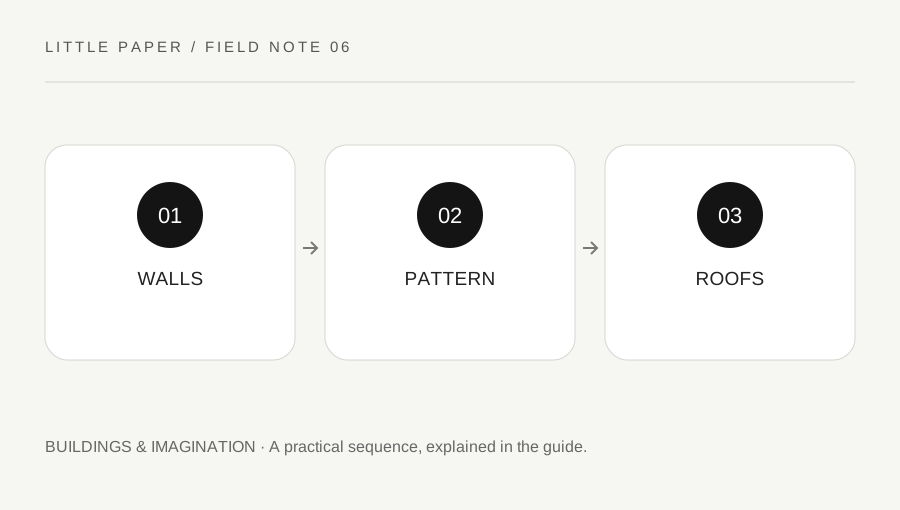
Original explanatory diagram. Examples illustrate a method or decision; they are not claims of personal testing.
Print the complete fantasy scene
Open the linked SVG and use print preview to check the flags, base line and border. Choose a suitable fit setting for your paper and preserve the image proportions. A cropped flag can be avoided by checking one draft before printing a group set.
Use appropriate materials according to their labels and protect the surface where needed. If children participate, an adult should select supplies and supervision for the actual activity. The drawing itself does not certify an age or material combination.
Assign different roles to walls and roofs
Choose a small palette for wall surfaces and another colour or treatment for the roofs. A contrasting doorway can help the centre remain visible. Natural stone colours are optional; an imaginative castle can use a completely different palette.
Start with broad areas and keep some paper uncoloured if that helps the design. The existing windows and decorative lines already create detail. You do not need to add a new pattern to every surface.
Repeat a modest stone mark
On one wall area, lightly sketch a few spaced horizontal or block-like marks with a suitable tool. Keep the pattern simple enough to repeat comfortably. This is an invented surface pattern, not a claim about real masonry or structural construction.
Compare the patterned area with an adjacent flatter wall. Notice whether the difference gives the towers separate visual roles. If it becomes too busy, leave the remaining walls simpler rather than trying to make every section equally dense.
Use flags and doorway as accents
The flags and doorway offer smaller areas where one repeated colour can connect the scene. Choose a relationship you like, such as matching flags with different roofs or a single doorway accent. Exact matching is optional.
For a worked version, pattern only the two side towers and keep the central wall quiet. On another copy, reverse that allocation. Compare the effect while keeping the palette similar, so the changed pattern placement is easier to see.
Describe the invented castle
After colouring, give the castle an original name or write one sentence about its imagined setting if you want. Avoid borrowing a branded fictional castle name or copying another artist's design to make the page seem affiliated.
Review one repeated pattern and one area you intentionally left quiet. Let materials dry as directed before stacking. The original sheet supports a practical creative comparison, with historical accuracy and therapeutic claims outside the activity's scope.
Make a separate pattern strip on scrap paper before drawing marks on the walls. Try widely spaced blocks, then a denser version, and choose one. Keep the pattern invented and simple. The strip can be reused as a visual reminder while working across the side towers, without requiring every mark to have identical dimensions.
Choose one roof or flag colour as an accent and compare it with the wall swatch. If the accent attracts more attention than you want, change the scrap test before filling the small printed shapes. Leave the doorway readable and keep some wall space unpatterned. You can add a brief original castle description after colouring, naming one visual decision that supports the imagined place. This is a composition activity, so there is no hidden historical answer to discover or architectural standard to reproduce.
Your original printable
Download the original SVG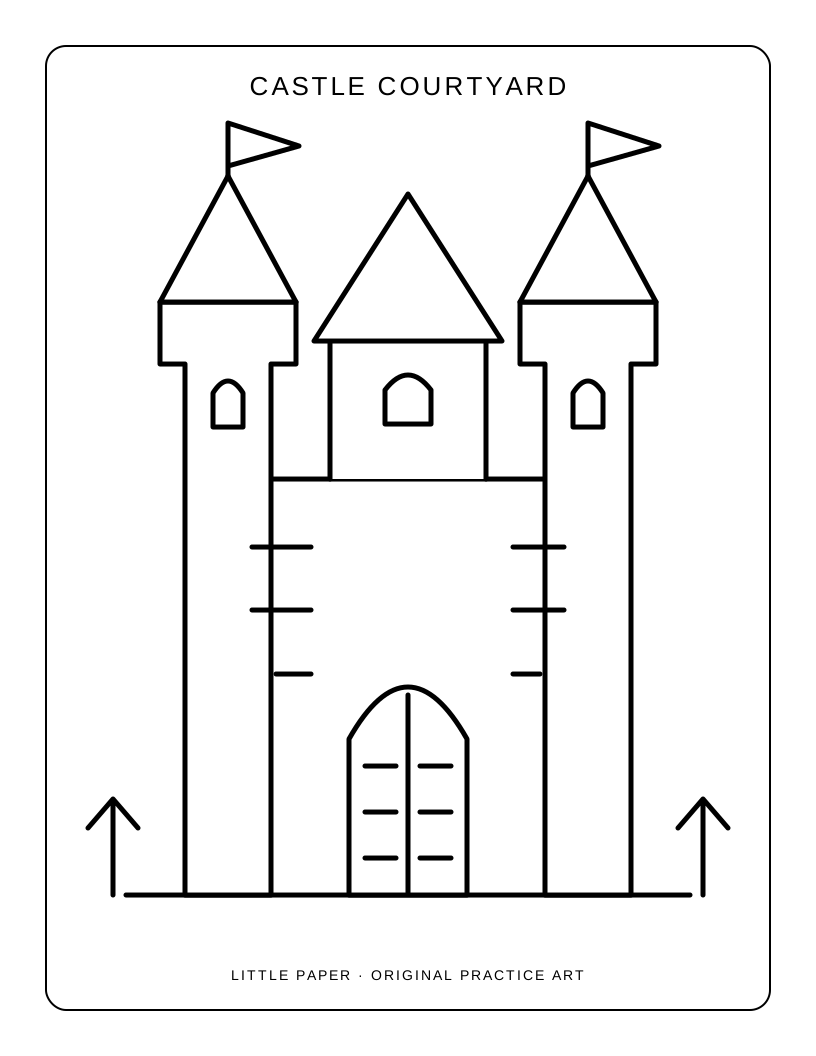
A practical checklist
Choices are saved in this browser. Reset them here or clear this site’s browser storage.
Questions that come up
Is this a real historical castle?
No. It is an original fantasy illustration. Added stone marks are decorative rather than architectural instructions.
Must every wall have a pattern?
No. Contrasting patterned and quiet surfaces is part of the experiment.
Can I invent a castle name?
Yes. Use an original name or story if desired, without suggesting affiliation with a protected fictional setting.
References & scope
Background references checked on 18 October 2026. Worked examples and diagrams are original teaching material.