Guitar Coloring Page: Separate the Body, Neck and Music Notes
This original guitar sheet has a broad body, narrow neck and surrounding note shapes. Use it to compare a textured large area with simpler smaller ones. The instrument is a stylized drawing, so the palette can be natural, decorative or entirely imagined.
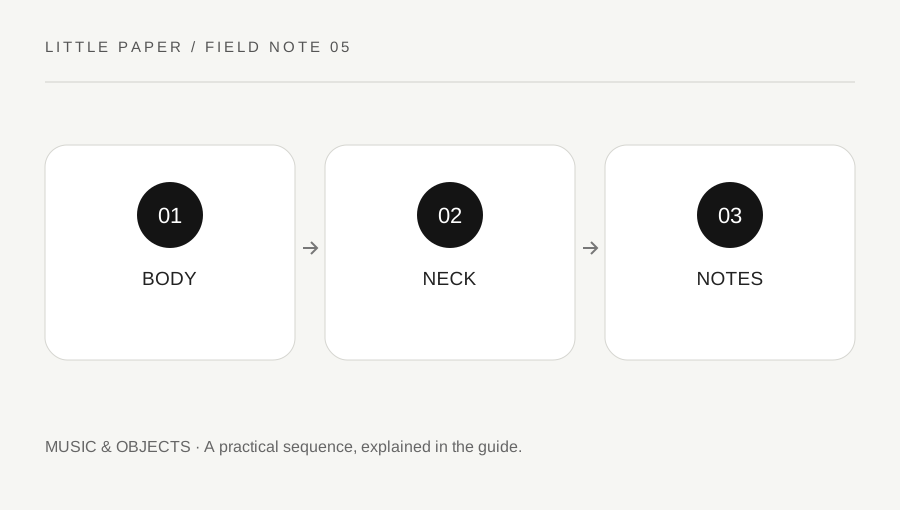
Original explanatory diagram. Examples illustrate a method or decision; they are not claims of personal testing.
Check the narrow details in preview
Open the printable SVG and confirm that the guitar head, body and surrounding notes fit within the border. Use print preview and a suitable fit-to-page setting. Avoid enlarging so much that the top or bottom is clipped.
Print one draft to see whether the strings remain readable on your printer. Use suitable paper and art materials, following their labels. Choose appropriate tools and supervision for the participants rather than assuming a small printed detail suits every material.
Choose a body palette
The broad guitar body can use one flat colour, several bands or a light invented wood-like texture. Test the marks on scrap paper first. You do not need to reproduce the material or construction of a real instrument.
Keep a lighter or darker choice available for the neck and surrounding details so the parts remain distinct. A limited palette can make this easier than using a new colour in every enclosed area. The black linework already supplies some separation.
Try gentle repeated texture
If you want a wood-like effect, draw a few lightly curving marks within the body using a suitable tool. Keep spacing comfortable and leave some broad areas quiet. This is a decorative pattern, not an instruction about real wood grain.
Work around the sound-hole and string lines so they remain visible. Do not feel obliged to fill every narrow space between strings with a different colour. A simpler treatment can preserve the drawing's structure and make the broader pattern easier to see.
Use the notes as small accents
Choose one or two note colours that repeat part of the guitar palette or contrast with it. Keep them deliberate rather than adding unrelated colour only because the shapes are small. The note shapes are visual elements in this page, not a complete music-reading exercise.
For a worked comparison, make the body patterned and the notes flat, then try another copy with a quiet body and colourful notes. Describe which part attracts attention. There is no required correct hierarchy.
Review the large and small marks
Look at the page from a normal viewing distance. Ask whether the body texture, neck and surrounding notes remain distinguishable. If the narrow areas feel crowded, stop adding detail rather than repeatedly darkening them.
Let materials dry as directed and record the tool used for the successful texture. The sheet is original line art and does not reproduce an instrument brand or a protected character. The creative exercise stays focused on shape, pattern and readable contrast without claims about musical skill or health benefits.
Create a small texture sample with three lightly curved lines and another with closer repeated lines. Compare their visual density before adding a pattern to the guitar body. Use only a tool and pressure appropriate to the paper. A few well-spaced marks can suggest a surface without filling every available area.
Keep the neck and note shapes simple while testing the body. If you want a colour repeat, choose one small accent from the body and place it in selected notes. The repetition does not need equal area or exact symmetry. Check the strings in the draft print before using a broad dark tool near them. At the end, explain which areas were patterned and which were left quiet. That description captures the actual creative experiment without turning the stylized instrument into a technical drawing.
Your original printable
Download the original SVG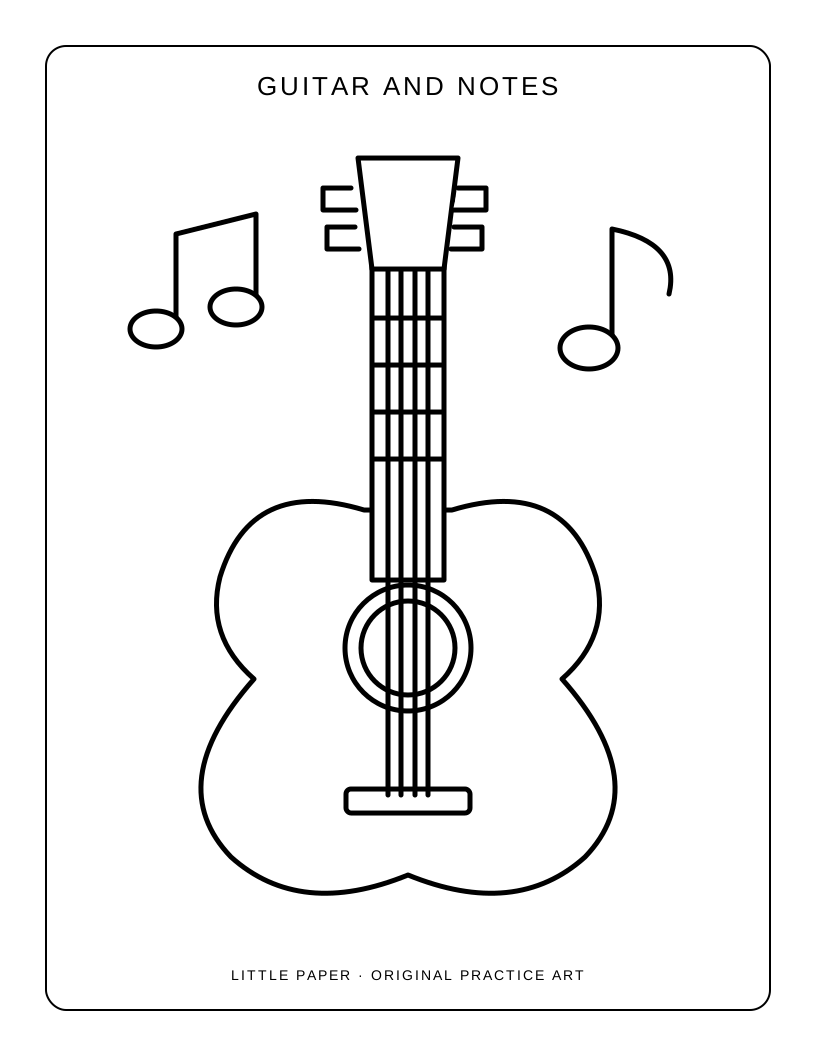
A practical checklist
Choices are saved in this browser. Reset them here or clear this site’s browser storage.
Questions that come up
Does the page teach how to play guitar?
No. It is a stylized colouring activity. The notes and instrument shapes support visual composition rather than a complete music lesson.
Must the guitar look wooden?
No. A flat or imaginative colour treatment is equally appropriate.
Should I colour every string gap separately?
Not necessarily. Keep the narrow linework readable and use a tool suited to the detail.
References & scope
Background references checked on 18 October 2026. Worked examples and diagrams are original teaching material.