House Coloring Page: Repeat Window Colours and Vary the Roofs
Three original little houses provide repeated windows, doors and roof shapes. Choose one feature to repeat and another to vary so the street feels related without making every house identical. This is a fantasy streetscape rather than a real building plan.
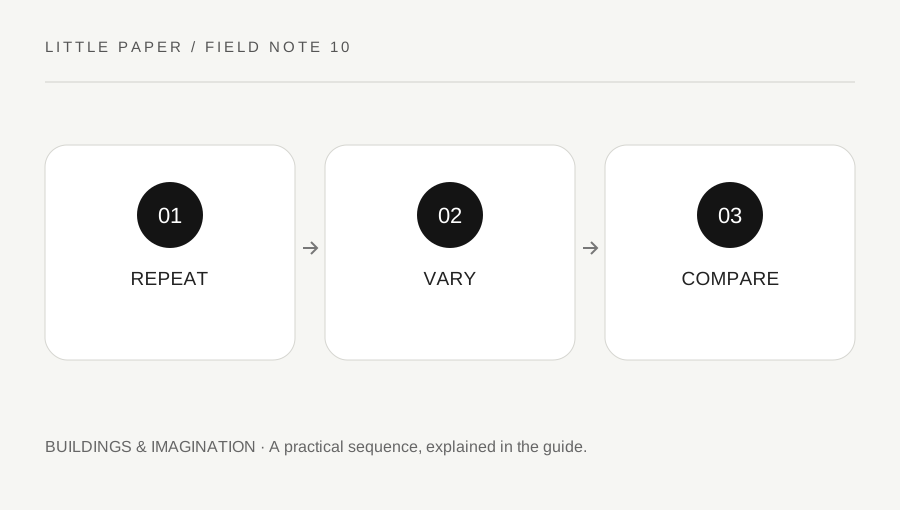
Original explanatory diagram. Examples illustrate a method or decision; they are not claims of personal testing.
Check the street’s full width
Open the linked SVG and inspect all three houses, side roof edges and ground line in print preview. Use a suitable fit setting instead of enlarging until the outer houses are clipped. Keep the drawing undistorted.
Print one draft and test the colouring materials on suitable paper. Follow art-supply labels and choose supervision appropriate to the participants. A smaller window can remain a simple flat area if the available tool does not suit fine detail.
Choose the feature that repeats
Select one element to share across the houses, such as window colour, door colour or a modest wall mark. Repetition can connect the scene without requiring every surface to match. Write the choice down before starting if you want a clear comparison.
Natural building colours are optional. The houses can use invented palettes, and white paper can remain part of the design. The illustration does not claim real construction, street planning or architectural accuracy.
Choose the feature that varies
Give the roofs different colours or use a different wall treatment for each house. Keep this variation distinct from the repeated feature so you can explain both. Too many simultaneous rules can make a first experiment harder to follow.
Try swatches on scrap paper to see how adjacent colours look. A colour name alone does not tell you how dark or bright the actual tool will appear. Use the materials you have rather than assuming a new set is needed.
Work across the scene in stages
Colour the shared feature on all three houses first, then add the varied feature. This makes the repetition easy to maintain. Return to broad walls or smaller details afterward as desired.
For a worked version, keep all windows one quiet colour and give each roof a different hue. On another copy, keep roofs related and vary the windows. Compare which version feels more connected or lively to you. Neither is a required correct street.
Add only the story details you want
The open areas can remain blank or receive a small original detail such as a sign, a plant pot or an invented house number. Keep additions manageable and avoid covering the existing outlines with unrelated dense marks.
Review the repeated and varied choices from a normal viewing distance. Let materials dry as directed before stacking. The original page supports a practical pattern-and-composition activity without reproducing a real property's plans or claiming educational or medical outcomes beyond the task itself.
Use a small planning row with three roof triangles and three door rectangles on scrap paper. Repeat one door colour while varying the roof colours, then compare the reverse arrangement. Keep this as a quick swatch test rather than a detailed second drawing. Choose the relationship you want for the full scene.
Work across the repeated feature first so the decision stays visible. If you add original house numbers or signs, keep them small enough not to cover the existing door and window shapes. They can be invented details rather than real addresses. Review whether the street feels connected through the chosen repeat. Another participant may prefer a deliberately unrelated set of houses; ask for the design explanation instead of treating matching as compulsory. The comparison is complete when the intended shared and varied features can be identified.
Your original printable
Download the original SVG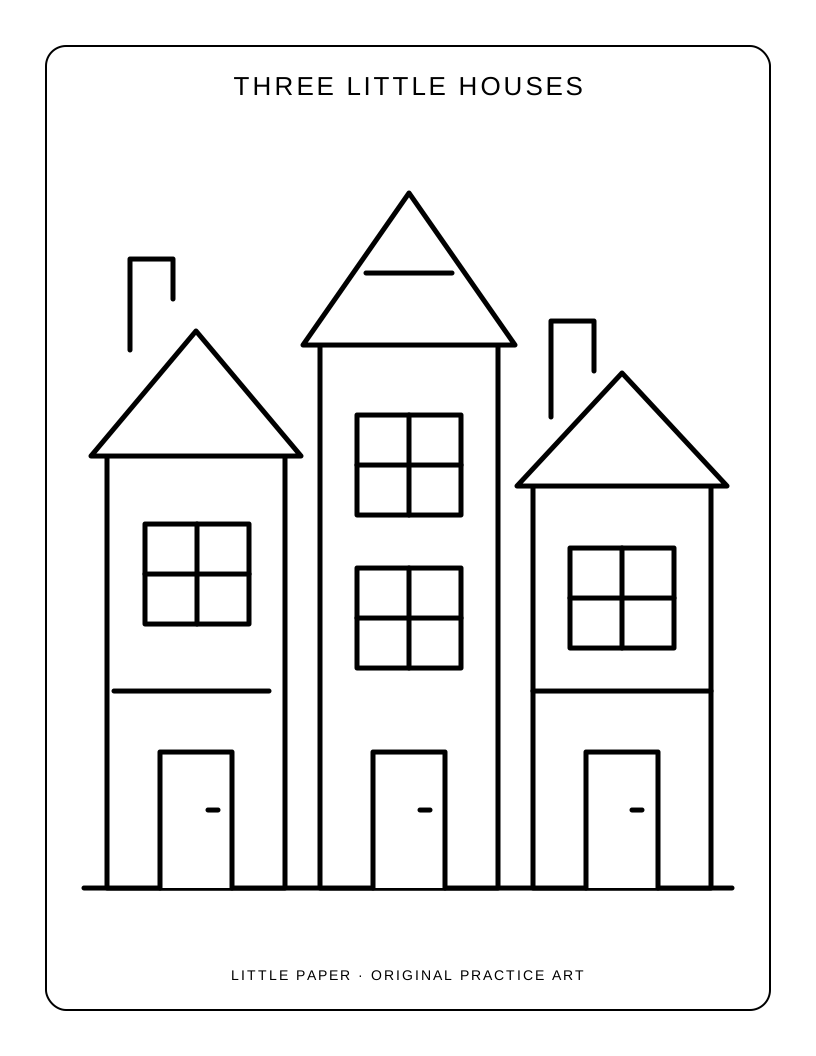
A practical checklist
Choices are saved in this browser. Reset them here or clear this site’s browser storage.
Questions that come up
Must all houses use the same palette?
No. The exercise invites one shared feature and one varied feature, with other choices left open.
Is this a real house plan?
No. It is an original simplified fantasy scene for colouring.
Can I add signs or house numbers?
Yes. Add original manageable details if desired, while keeping the main shapes readable.
References & scope
Background references checked on 18 October 2026. Worked examples and diagrams are original teaching material.