Weather Coloring Page: Give Four Panels Different Colour Rules
The original weather-window sheet has four panels with sun, rain, rainbow and storm shapes. Use a separate colour rule in each panel or connect them with one repeated accent. The activity concerns visual organization, without requiring a scientific weather diagram.
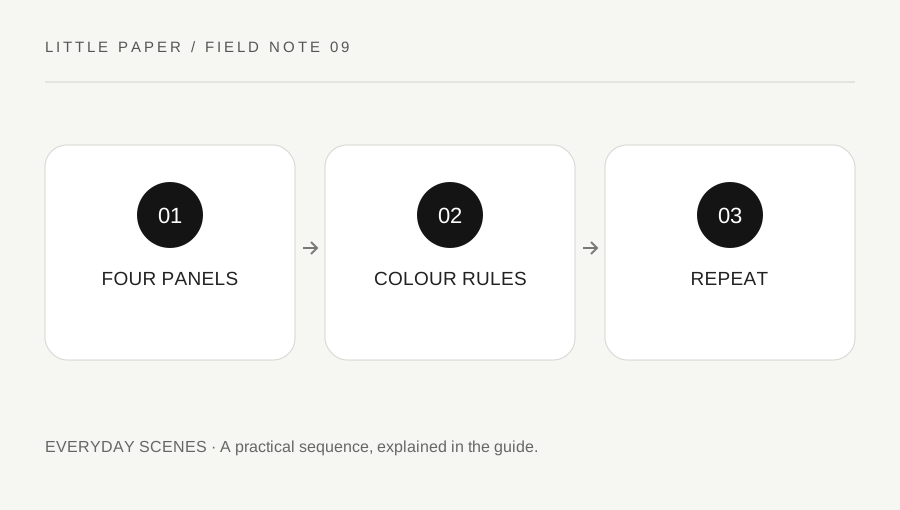
Original explanatory diagram. Examples illustrate a method or decision; they are not claims of personal testing.
Preview all four panels
Open the printable SVG and check that the window frame, rays, drops and lower stand fit within the border. Use a suitable page-fit setting and keep the image proportions intact. A draft copy helps reveal printer clipping before a group activity.
Choose materials appropriate to the paper and participants, following their labels. Test small marks on scrap paper. The narrow drops and rays can remain simple if the available tool is broad; extra supplies are optional.
Choose one rule per panel
A rule can be two colours only, mostly light colours, a repeated stripe or a single strong accent. Write the four rules on a separate note before starting. They can differ without making one panel better than another.
Keep natural weather colours optional. A purple sun or an invented rainbow sequence is acceptable in this art exercise. If you want a separate science discussion, use an appropriate reference rather than treating this stylized sheet as a complete explanation.
Start with the broad shapes
Colour clouds, sun and rainbow bands before adding tiny details. Keep the panel boundaries visible. A light base layer lets you compare areas before increasing saturation with a suitable tool.
Do not feel required to colour the entire background of every panel. White paper can connect the four scenes. If a panel becomes busy, leave another simpler so the overall arrangement still has places for the eye to rest.
Connect the panels deliberately
Choose one small repeated colour or mark across the panels if you want unity. It might appear in a sun ray, a drop, a rainbow band and the storm shape. Exact equal amounts are unnecessary; the repetition only needs to be intentional.
For a worked comparison, use four unrelated palettes on one copy and one shared accent on another. Describe whether the shared accent makes the panels feel more connected. This is a visual preference, not a measured test with one correct result.
Review the rule and the exception
Look at each panel and identify where its chosen rule is visible. If you changed your mind partway through, explain that choice rather than treating it as a mistake. An exception can become part of the design.
Let materials dry as directed before storing. Give the sheet an original title if desired. The artwork and activity are original Little Paper material, with practical printing and supply references rather than copied publisher exercises or claims about emotional treatment.
Make four small boxes on scrap paper to stand for the panels and write each colour rule beneath its box. Use only a few swatches to test the plan. If one panel uses mostly light marks and another mostly darker marks, compare them as relative choices in the actual supply set rather than relying on colour names.
Choose one optional shared accent and place a small sample in every box. Decide whether the connection is useful before applying it to the printable. A participant can change a rule and explain why; the note should not become a grading sheet. After colouring, name the panel that most clearly shows its rule and one area intentionally left white. Keep any separate weather-science discussion grounded in an appropriate source, since this imaginative four-panel activity does not provide a complete physical model.
Your original printable
Download the original SVG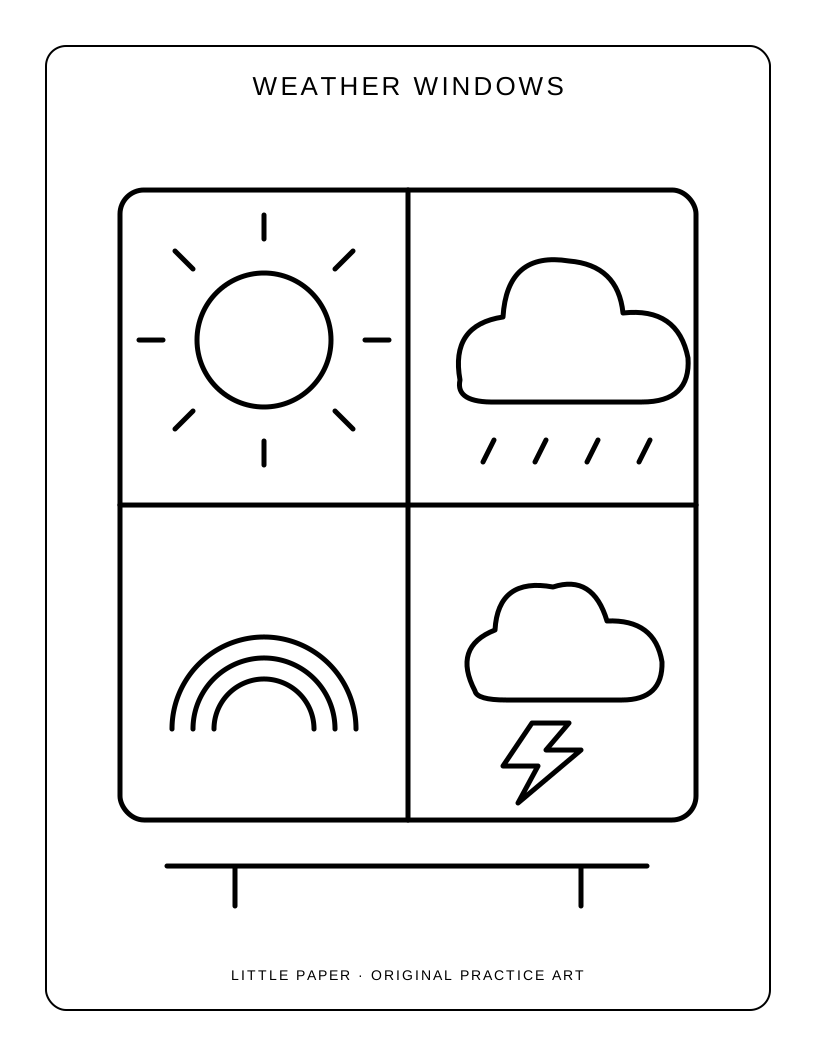
A practical checklist
Choices are saved in this browser. Reset them here or clear this site’s browser storage.
Questions that come up
Must rainbow colours follow a real sequence?
Not for this creative exercise. Use an appropriate science reference if you want to study real optical phenomena separately.
Should every background be filled?
No. White paper can be a deliberate shared element between panels.
What if I change a colour rule?
Explain the new choice and continue. The activity supports intentional decisions rather than perfect adherence to a hidden answer key.
References & scope
Background references checked on 18 October 2026. Worked examples and diagrams are original teaching material.